Introduction
Lena Gieseke represents a fascinating intersection of art, technology, cinema, and visual storytelling. Known for her work as a German artist and 3D specialist, she has developed a creative identity that extends beyond conventional artistic categories. Her career also attracted public attention through her connection to filmmaker Tim Burton, but her professional story is ultimately broader than that association. Through digital techniques, visual experimentation, and an interest in imaginative environments, Gieseke illustrates how contemporary artists can move between traditional creativity and emerging forms of media.
An Artist Working Between Art and Technology
Gieseke’s creative background reflects a period when digital tools were becoming increasingly important to visual artists. Rather than treating technology simply as a technical instrument, she has worked with computer-generated imagery and three-dimensional design as forms of artistic expression.
This approach is significant because digital art allows creators to construct spaces that may be impossible to produce physically. Consequently, artists can explore unusual proportions, textures, perspectives, and environments while maintaining precise control over their compositions. Her career offers an example of how technical knowledge and artistic imagination can operate together rather than existing as separate disciplines.
Lena Gieseke and the World of 3D Art
Three-dimensional artwork requires a combination of visual judgment and technical understanding. An artist must consider form, lighting, depth, texture, movement, and spatial relationships. Gieseke’s work in this area demonstrates the increasingly interdisciplinary nature of contemporary visual culture.
Moreover, 3D imagery has become influential across film, advertising, gaming, architecture, and digital entertainment. As these industries have expanded, artists with both creative and technological skills have gained new opportunities. Gieseke’s professional path therefore fits into a much larger cultural shift toward digital visual storytelling.
A Connection to Tim Burton That Drew Public Attention
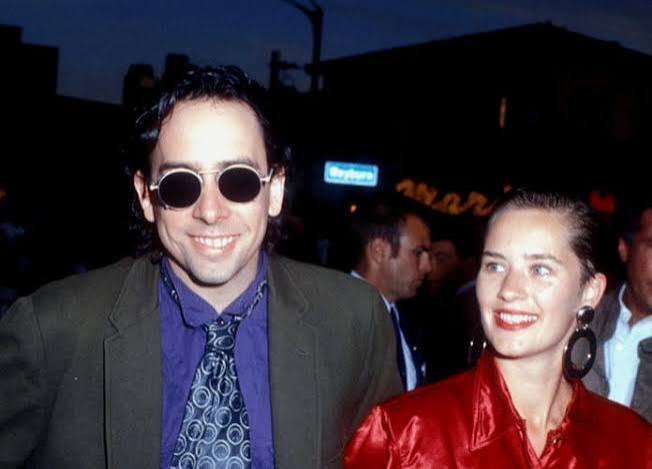
For many people, Lena Gieseke first became recognizable because of her relationship with filmmaker Tim Burton. The two were married in the late 1980s, and their connection placed her within the orbit of one of cinema’s most visually recognizable directors.
However, personal relationships can sometimes overshadow professional achievements, particularly when one person is already a major public figure. In Gieseke’s case, separating her artistic identity from celebrity associations provides a more complete understanding of her career. Her work deserves attention on its own terms, especially because it reflects the changing relationship between art, computers, and visual culture.
A Broader Cultural Context
The story of Gieseke also connects with the evolution of digital creativity. During the late twentieth century, computer-generated imagery was still developing into the powerful creative medium familiar today. Artists who adopted digital methods early were working in a rapidly changing environment.
Therefore, her career can be viewed as part of a generation that helped establish digital tools as legitimate artistic instruments. Today, audiences encounter computer-generated imagery almost everywhere, from major motion pictures to interactive media. Looking back at earlier practitioners helps explain how that transformation developed.
The Human Side Behind the Professional Image
Public discussions about artists often focus on credits, relationships, and career milestones. Yet creative work is also shaped by curiosity, experimentation, patience, and a willingness to learn unfamiliar techniques.
That human element is particularly relevant to digital artists. Unlike a single traditional medium, digital creation often requires continual adaptation as software and production methods change. An artist must therefore combine creative confidence with technical flexibility. Gieseke’s career illustrates this broader reality: contemporary creativity frequently requires people to cross boundaries between artistic disciplines.
Why Her Story Remains Interesting
The continuing interest in Lena Gieseke reflects more than curiosity about a person connected to a famous filmmaker. It also demonstrates how audiences are increasingly interested in the people working behind visual culture.
Furthermore, her professional background offers an opportunity to consider how women artists and technical specialists have contributed to fields sometimes dominated in public perception by directors, actors, and other highly visible figures. Her story encourages a wider definition of artistic success—one that includes digital craftsmanship, experimentation, and work that may not always receive the same publicity as mainstream entertainment.
Lena Gieseke in the Digital-Art Era
Today, digital art has moved far beyond the experimental territory it occupied decades ago. Advances in rendering, animation, virtual production, and artificial intelligence have transformed the creative landscape. Nevertheless, the fundamental role of the artist remains important: technology can provide possibilities, but creative decisions determine how those possibilities become meaningful visual experiences.
In that sense, Gieseke’s career remains relevant to conversations about the development of digital creativity. Her work belongs to a history in which computers gradually became not only tools for production but also instruments for imagination.
Frequently Asked Questions
Who is Lena Gieseke?
Lena Gieseke is a German artist and 3D specialist associated with digital visual art, computer-generated imagery, and creative design. She also became publicly known through her former marriage to filmmaker Tim Burton.
What is she known for professionally?
She is particularly associated with digital and three-dimensional artistic work. Her career reflects the intersection of traditional artistic thinking and computer-based visual techniques.
Was Lena Gieseke married to Tim Burton?
Yes. Gieseke and Tim Burton were married from 1987 until 1991. Their relationship contributed to her public recognition, although her professional identity extends beyond that connection.
Why is her career culturally interesting?
Her career offers insight into the development of digital art and the growing importance of technology in creative industries. It also highlights how artists can work across technical and traditional creative boundaries.
Conclusion
Lena Gieseke offers a compelling example of an artist whose story sits between personal history, technological change, and creative experimentation. While her association with Tim Burton remains part of her public biography, it should not define the whole picture. Her work in digital and three-dimensional art belongs to a larger transformation in which computers became powerful tools for artistic expression. Ultimately, her story reminds us that visual culture is shaped not only by the most famous names on screen, but also by creative professionals working behind the scenes to expand what art can become.