Introduction
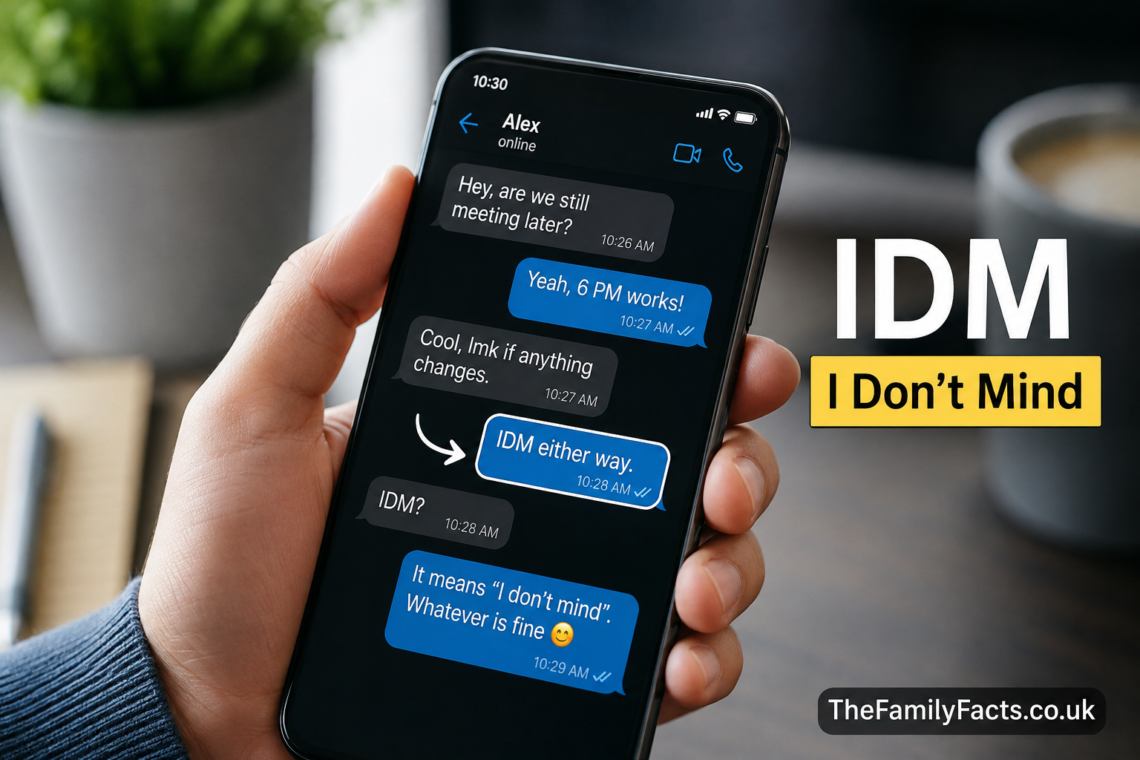
idm meaning in text can seem straightforward, yet the abbreviation can carry different meanings depending on the conversation, platform, and relationship between the people communicating. In fast-moving digital conversations, short forms have become a kind of social shorthand: they save time, signal familiarity, and sometimes quietly change the tone of a message. Consequently, understanding an abbreviation requires more than expanding three letters. Context matters, especially when the same combination can appear in casual chats, social media comments, gaming conversations, or more specialized communities.
Why Short Abbreviations Matter in Digital Conversation
Digital communication has encouraged people to compress language without necessarily making communication less expressive. Instead, abbreviations often work like cultural signals. A person who writes a short phrase may be trying to sound relaxed, humorous, uncertain, or simply efficient. Therefore, when someone searches for idm meaning in text, they are often looking for more than a dictionary definition. They want to know what the sender probably intended and how the expression should be understood within the surrounding conversation.
The Most Common Interpretation Depends on Context
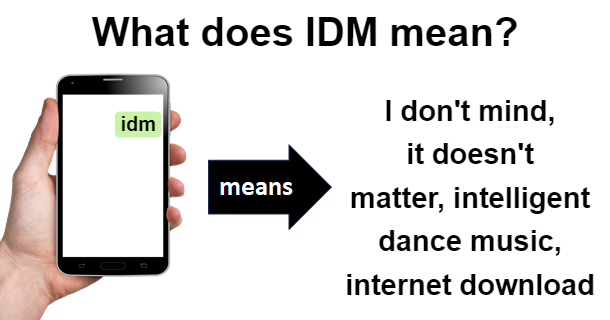
One important reason abbreviations can be confusing is that they do not always have one universal definition. In casual online communication, IDM may be used as shorthand for different expressions, while in other settings it can refer to a completely unrelated technical or professional term. As a result, reading the words immediately before and after the abbreviation is essential. The topic, tone, punctuation, and relationship between the speakers can all provide clues about the intended meaning.
How Context Changes the Meaning
Imagine receiving a three-letter abbreviation from a close friend. You may interpret it differently from the same abbreviation appearing in a technical discussion. Similarly, a message on social media can use language more loosely than an email or formal document. Because digital language evolves through communities, particular abbreviations can develop local meanings.
Furthermore, people frequently invent or adapt shorthand within friend groups. A phrase that seems obvious to one group might be unfamiliar to another. This is why searching for idm meaning in text without considering context can sometimes produce an incomplete answer.
Texting Language Is Built Around Speed and Familiarity
The rise of smartphones transformed everyday writing. Messages that once might have required several sentences can now be reduced to a handful of words. Abbreviations became especially useful because they allow people to communicate quickly while maintaining an informal atmosphere.
However, speed is not the only factor. Shorthand can also create a sense of belonging. People who regularly communicate within the same online community often understand expressions without explanation. In this way, abbreviations function almost like conversational inside jokes.
Where You Might Encounter IDM
The abbreviation may appear across several digital environments, including messaging apps, social platforms, gaming communities, discussion boards, and comment sections. Nevertheless, its interpretation can shift between these spaces.
| Context | Why interpretation can differ |
|---|---|
| Private texting | Friends often develop informal shorthand |
| Social media | Users frequently adopt platform-specific slang |
| Gaming chats | Communities create specialized terminology |
| Online forums | Abbreviations may reflect a particular interest |
| Professional communication | IDM may have a technical or organizational meaning |
The table highlights an important principle: the setting is part of the meaning. A reader should avoid assuming that every appearance of IDM carries the same definition.
Reading the Conversation Around the Acronym
When an unfamiliar abbreviation appears, the surrounding sentence is usually the best starting point. Look at the subject being discussed, the emotional tone, and what the speaker says immediately afterward. If the message concerns plans, feelings, technology, school, work, or entertainment, those clues can narrow the possibilities considerably.
Additionally, consider the relationship between the participants. Friends may use unconventional shorthand that would never appear in a formal exchange. Meanwhile, someone communicating with a broader audience is more likely to use a widely recognized abbreviation.
Why Online Slang Keeps Changing
Internet language is not static. New expressions can become popular within weeks, while older abbreviations may gradually disappear. Social media accelerates this process because phrases can spread rapidly between communities and countries.
Moreover, younger internet users often encounter language through videos, comments, games, and group chats rather than traditional dictionaries. Consequently, meanings can develop organically. An abbreviation may begin with one established definition and later acquire additional interpretations through repeated informal use.
This constant change explains why older references sometimes provide a different explanation from what a person encounters in a current conversation.
When You Should Ask Instead of Guessing
Sometimes there simply is not enough information to determine what an abbreviation means. In that situation, guessing can create unnecessary confusion. A simple question such as “What do you mean by IDM here?” is often the clearest solution.
This is particularly useful when the conversation is important or emotionally sensitive. Rather than assigning an interpretation that could be incorrect, asking for clarification keeps the communication respectful and accurate.
The Difference Between Meaning and Intention
Understanding an abbreviation involves two separate questions. The first is linguistic: What can these letters stand for? The second is conversational: What was this particular person trying to communicate?
Those questions do not always have identical answers. Even if an abbreviation has several established meanings, only one may fit the speaker’s intention. Therefore, a good interpretation considers both vocabulary and human context.
Digital Language Reflects How People Relate to One Another
There is something revealing about the popularity of abbreviations. They demonstrate that communication is not simply about transmitting information. It is also about creating rhythm, familiarity, humor, and identity.
A short expression can feel friendly in one setting and confusing in another. Likewise, people may deliberately use shorthand because it makes a conversation feel less formal. The language of texting therefore reflects relationships as much as it reflects technology.
How to Interpret IDM More Reliably
If you encounter IDM in a message and are unsure what it means, use a simple process:
- Read the entire message, rather than focusing only on the abbreviation.
- Identify the topic of the conversation.
- Consider the platform, since communities develop their own terminology.
- Look at the speaker’s tone and relationship with you.
- Check whether another interpretation makes more sense in that context.
- Ask the sender directly if the meaning remains unclear.
This approach is more reliable than automatically choosing the first definition found online.
Frequently Asked Questions
Can IDM have more than one meaning?
Yes. Abbreviations can have multiple meanings across texting, social media, technology, business, and specialized communities. Context determines which interpretation is appropriate.
Why do people use abbreviations in texts?
Mostly because they make communication faster and more casual. They can also express familiarity with a particular online community or style of communication.
Is IDM always slang?
No. An abbreviation can be informal slang in one conversation while representing a formal technical or professional term somewhere else.
How can I know what someone means by IDM?
Examine the surrounding conversation first. If the meaning is still uncertain, asking the sender is the safest and clearest approach.
Conclusion
Ultimately, idm meaning in text illustrates a larger truth about digital language: meaning rarely exists in isolation. Three letters can carry different implications depending on the conversation, platform, community, and relationship between the people communicating. Therefore, interpreting shorthand successfully requires attention not only to vocabulary but also to context and human intention.
As online communication continues to evolve, abbreviations will keep appearing, changing, disappearing, and gaining new meanings. The most useful habit is consequently not memorizing every acronym, but learning how to read the conversation around it. In the constantly shifting language of the internet, context remains one of the most dependable guides.