

Introduction
Hans Vestberg and David Einhorn represent two distinct approaches to influence in modern American business. Vestberg is a telecommunications executive known for leading Verizon Communications and navigating the evolution of digital connectivity, while Einhorn is a prominent hedge fund manager and founder of Greenlight Capital, recognized for his investment analysis and shareholder activism. Although their professional paths differ, both illustrate how leadership, capital allocation, and strategic decision-making shape major corporations. Examining Hans Vestberg and David Einhorn offers a useful perspective on the relationship between corporate management and financial markets.
Who Are Hans Vestberg and David Einhorn?
To understand their significance, it is important to distinguish their professional roles and the environments in which they operate. Vestberg has built his career around telecommunications infrastructure, international business, and organizational leadership. Einhorn, meanwhile, has concentrated on investment research, portfolio management, and identifying opportunities that he believes the market has mispriced. Their careers demonstrate how influence can emerge from different positions within the same economic system.
| Individual | Professional identity | Area of influence |
|---|---|---|
| Hans Vestberg | Telecommunications executive and former Verizon CEO | Corporate strategy, connectivity, network infrastructure, and digital transformation |
| David Einhorn | Investor and founder of Greenlight Capital | Hedge fund management, financial analysis, and investment advocacy |
Although their responsibilities differ, both work in environments where decisions must be evaluated against measurable outcomes. For Vestberg, those outcomes include network performance, customer experience, and business growth. For Einhorn, they include investment performance, risk management, and the accuracy of financial judgments.
Hans Vestberg’s Journey from Ericsson to Verizon
Hans Vestberg developed his professional reputation in the telecommunications industry, where technical innovation and long-term infrastructure investment are essential. Before becoming a leading figure at Verizon, he served as chief executive of Ericsson, the Swedish telecommunications equipment company. That experience exposed him to the international dimensions of mobile communications, including network development, technological competition, and the changing needs of telecom operators.
In 2018, Vestberg became chief executive officer of Verizon Communications. His appointment came during a period when telecommunications companies were preparing for the wider deployment of 5G networks. Consequently, his leadership became closely associated with the challenge of converting major infrastructure investments into sustainable commercial advantages.
However, building advanced networks involves more than introducing new technology. Telecommunications companies must also manage operating expenses, maintain reliable service, compete for customers, and justify capital spending to investors. Vestberg’s career illustrates the complexity of leading a business whose essential services must function continuously while technology and consumer expectations evolve.
David Einhorn and the Discipline of Contrarian Investing
David Einhorn established Greenlight Capital in 1996 and became known for a research-driven investment approach. His reputation grew through high-profile investment positions and public presentations explaining why he believed certain companies were incorrectly valued by the market. His work helped bring greater attention to the role activist and research-oriented investors can play in corporate discussions.
Contrarian investing requires an investor to question prevailing assumptions rather than simply follow market enthusiasm. Nevertheless, taking an opposing position is not automatically evidence of superior judgment. Investors must support their arguments with financial analysis, assess downside risks, and recognize that market prices can remain disconnected from their expectations for extended periods.
Einhorn’s approach reflects the importance of independent thinking in financial markets. At the same time, it highlights the tension between an investor’s desired returns and a company’s broader strategic priorities. Executives may favor investments that take years to produce results, whereas investors may emphasize near-term profitability, valuation, and the opportunity cost of deploying capital.
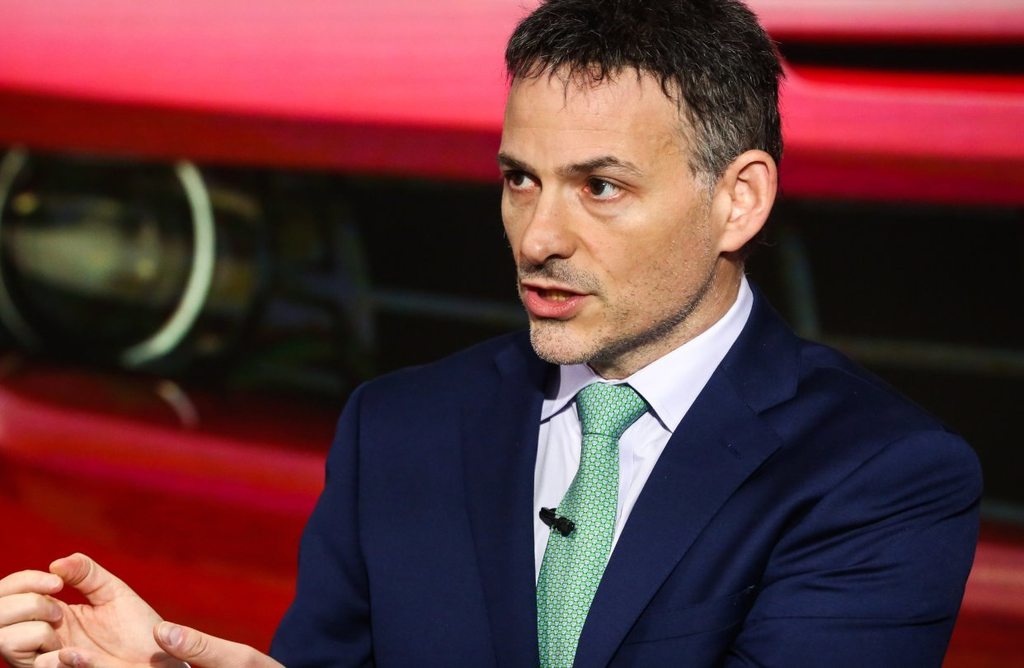
Two Different Perspectives on Corporate Decision-Making
The contrast between Vestberg and Einhorn becomes particularly interesting when considering how corporate decisions are evaluated. A chief executive must coordinate employees, technology, customers, regulators, and investors. A hedge fund manager, by comparison, evaluates securities and decides where to allocate capital based on expected returns and risk.
Neither perspective is inherently sufficient on its own. Management teams possess operational knowledge that may not be fully reflected in public financial statements. Investors, however, can challenge assumptions that internal leadership teams have become reluctant to reconsider.
This difference can create productive pressure. For example, a telecommunications company may believe that substantial infrastructure investment will strengthen its competitive position over time. Investors may ask whether the expected benefits justify the cost, whether the company has alternatives, and how quickly those benefits could appear in its financial results.
Importantly, these questions do not establish that Vestberg and Einhorn have a direct professional relationship or have engaged in a specific dispute. Rather, their careers illustrate two forces that routinely interact across public companies: executive responsibility and investor scrutiny.
Why Telecommunications Attracts Investor Attention
Telecommunications is a capital-intensive industry. Companies must continually invest in network equipment, spectrum access, maintenance, cybersecurity, and technological upgrades. At the same time, they operate in competitive markets where customers can compare prices, service quality, and bundled offerings.
For investors, these characteristics create a complicated valuation exercise. A company may own essential infrastructure and generate recurring revenue, yet still face pressure from debt, high capital expenditure, competition, or changing consumer behavior. Therefore, a strong market position does not automatically translate into superior shareholder returns.
For executives such as Vestberg, the challenge is to balance present-day financial discipline with the infrastructure needed for future growth. For investors such as Einhorn, the challenge is to determine whether the market has correctly accounted for those trade-offs.
Moreover, telecommunications investments can have consequences beyond quarterly earnings. Reliable connectivity supports businesses, education, healthcare access, and public communication. As a result, decisions about network expansion can carry both commercial and broader social significance.
Leadership, Accountability, and the Expectations of Shareholders
Corporate leadership today operates under unusually close scrutiny. Earnings reports, analyst commentary, shareholder letters, and financial news can rapidly influence public perceptions of a company’s performance. Consequently, executives must explain not only what they intend to accomplish but also how their decisions create measurable value.
Vestberg’s responsibilities at Verizon have involved communicating a strategy for a large telecommunications business while navigating technological change and competitive pressure. Meanwhile, Einhorn’s investment career demonstrates how investors can use research and public arguments to question corporate valuations and management assumptions.
Yet accountability must be understood carefully. Shareholders are important stakeholders, but they are not the only people affected by corporate decisions. Employees depend on organizational stability, customers expect dependable services, and communities rely on infrastructure that often requires long planning horizons.
The most effective corporate oversight therefore considers both financial performance and the quality of strategic execution. Short-term results matter, but so do resilience, customer trust, and the ability to adapt when market conditions change.
The Human Side of Business and Investment
Behind the public language of earnings, valuations, and corporate strategy are people making decisions under uncertainty. Executives must decide how to allocate limited resources, motivate teams, and respond when ambitious plans encounter unexpected obstacles. Investors must judge incomplete information while managing the possibility that their analysis may be wrong.
These pressures help explain why business leadership cannot be reduced to a contest between management and shareholders. Both groups operate with imperfect information and competing incentives. Moreover, decisions that appear sensible from one perspective can look questionable from another.
Vestberg’s telecommunications background emphasizes the operational responsibility of maintaining and modernizing systems used by millions of people. Einhorn’s investment career emphasizes skepticism, valuation discipline, and the willingness to challenge accepted market narratives. Each perspective offers a different lesson about professional judgment.
Ultimately, sound decision-making requires more than confidence. It requires evidence, an understanding of trade-offs, and the willingness to revise assumptions when circumstances change.
What Their Careers Reveal About Modern Corporate America
The professional stories of Hans Vestberg and David Einhorn reflect a broader feature of modern capitalism: corporations are shaped by both those who operate businesses and those who finance them. Executives determine how resources are deployed in practice, while investors evaluate whether those decisions are likely to generate adequate returns.
This relationship can produce tension, particularly when infrastructure investments compete with demands for stronger short-term financial performance. Nevertheless, disagreement can also encourage transparency and improve strategic discipline when arguments are grounded in evidence.
At the same time, neither managerial confidence nor investor skepticism guarantees success. Business outcomes depend on market conditions, execution, competition, regulation, and technological developments that no individual can completely control.
Their contrasting careers therefore provide a useful framework for understanding corporate power. One perspective emphasizes the responsibility of building and operating an enterprise; the other emphasizes the responsibility of assessing its economic value. Both are essential to understanding how large companies function.
Conclusion
Hans Vestberg and David Einhorn occupy different positions in the business world, yet their careers illuminate a shared question: how should organizations balance long-term ambition with financial accountability? Vestberg’s experience in telecommunications highlights the complexity of operating essential infrastructure while preparing for technological change. Einhorn’s investment philosophy demonstrates the importance of questioning market assumptions and examining whether corporate decisions justify their costs.
There is no basis to assume that the two have a direct connection simply because their names appear together in a search. Their professional relevance instead lies in the contrasting roles they represent. Considered together, Hans Vestberg and David Einhorn offer a broader view of modern corporate America, where operational leadership, independent analysis, and shareholder expectations continually influence the direction of business.